
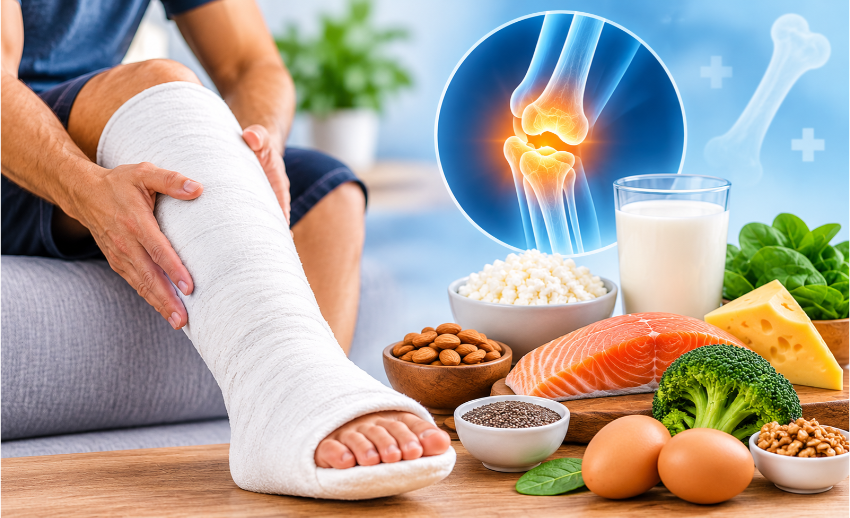
What to Eat for Fast Fracture Healing? Best Foods for Stronger Bones
Recovering from a fracture takes more than rest, medication and proper immobilisation. Your body needs the right nutrients to repair damaged bone, rebuild strength and heal at a steady pace. The right food for fracture healing provides calcium, vitamin D, protein, vitamin C, magnesium, zinc and other nutrients that bone repair depends on. Whether you have a wrist fracture, an ankle injury or a more serious bone injury, what you eat every day can support your recovery. Dr Abhijit Tayade, an experienced orthopaedic specialist, emphasises that good nutrition works best alongside proper medical care and follow-up.
Which Foods Help Fractures Heal Faster?
Milk, curd, paneer, eggs, dal, chickpeas, nuts, ragi, sesame seeds, green leafy vegetables and vitamin C-rich fruits like oranges, guava and amla support bone repair. Combine them with safe sunlight exposure for vitamin D, drink enough water, and avoid smoking and alcohol.
How Fracture Healing Works and Why Diet Matters
A broken bone heals in overlapping stages, and each stage places different demands on your body:
- Inflammation stage (first few days): The body clears damaged tissue and starts the repair process. Adequate protein and calories matter here.
- Repair stage (the following weeks): Soft tissue turns into new bone. Protein, vitamin C and zinc support collagen formation, and calcium and vitamin D help build mineral.
- Remodelling stage (weeks to months): New bone gradually hardens and reshapes. Steady calcium, vitamin D and overall nutrition help the bone regain strength.
Healing time varies with the bone involved, your age, the type of fracture and your overall health. Good nutrition cannot replace treatment, but poor nutrition can slow recovery.
Essential Nutrients That Support Faster Bone Repair
| Nutrient | Why your bones need it | Indian food sources |
|---|---|---|
| Calcium | Main mineral in bone structure | Milk, curd, paneer, cheese, ragi, sesame seeds |
| Vitamin D | Helps the body absorb calcium | Sunlight, fortified milk, egg yolk, fatty fish |
| Protein | Building block for tissue and collagen repair | Eggs, dal, chickpeas, rajma, soybeans, paneer, nuts |
| Vitamin C | Supports collagen formation | Amla, guava, oranges, lemon, tomato, bell pepper |
| Vitamin K | Supports bone strength | Spinach, methi, broccoli, cauliflower |
| Magnesium and zinc | Contribute to bone health and tissue repair | Almonds, pumpkin seeds, whole grains, legumes |
| Iron | Supports collagen and oxygen supply to healing tissue | Leafy greens, legumes, whole grains, eggs |
| Potassium | Helps the body retain calcium | Banana, coconut water, potato, leafy greens |
A balanced diet that includes a variety of foods works better than relying on a single nutrient or supplement.
Best Foods to Include in Your Fracture Recovery Diet
Calcium-Rich Foods for Strong Bones
Milk, curd, paneer, cheese, sesame seeds (til), ragi and green leafy vegetables are useful calcium sources. Including them daily helps maintain adequate calcium intake.
Protein Sources for Tissue Repair
Protein supports the body's natural repair process. Include eggs, lentils (dal), chickpeas, kidney beans (rajma), soybeans, paneer and nuts in your meals. If you eat non-vegetarian food, fish and chicken are good options too.
Vitamin C and Antioxidant-Rich Foods
Oranges, mosambi, guava, amla, lemon, strawberries, tomatoes and bell peppers provide vitamin C, which contributes to collagen formation.
Vitamin D Sources
Sunlight, fortified milk, eggs and fatty fish can help improve vitamin D intake. Many people in India are low in vitamin D even with plenty of sunshine, so a blood test and your doctor's advice are better than guessing.
Vitamin K, Iron and Potassium Foods
Spinach, methi, broccoli and other green leafy vegetables provide vitamin K and iron. Bananas, coconut water and potatoes add potassium. These nutrients are often missed in fracture diets, so add a serving of green vegetables to at least one meal a day.
Vegetarian and Indian Diet for Fracture Healing
A vegetarian diet can provide most of the nutrients needed for bone recovery. The right mix of pulses, dairy, vegetables, fruits and whole grains makes everyday meals balanced.
| Food | Important nutrients |
|---|---|
| Ragi | Calcium |
| Paneer | Protein and calcium |
| Milk and curd | Calcium and protein |
| Soybeans | Protein and minerals |
| Almonds | Magnesium and protein |
| Amla and guava | Vitamin C |
| Sesame seeds | Calcium and minerals |
| Spinach and methi | Vitamin K and iron |
| Banana and coconut water | Potassium |
Sample One-Day Indian Diet Plan for Fracture Healing
| Meal | Vegetarian option | Non-vegetarian option |
|---|---|---|
| Breakfast | Ragi porridge or besan chilla with a glass of milk | Boiled eggs with whole wheat toast and milk |
| Mid-morning | Orange or guava | Orange or guava |
| Lunch | Dal, green vegetable, roti, curd | Fish or chicken curry, vegetable, roti, curd |
| Evening snack | Handful of almonds and walnuts, or roasted chana | Handful of nuts, or sprouts chaat |
| Dinner | Paneer or soybean curry with chapati and salad | Egg curry or grilled chicken with chapati and salad |
Portions depend on your age, weight and medical condition, so ask your doctor or a dietitian to fit the plan to you.
Calcium and Vitamin D: An Important Combination
Calcium gives your bones the mineral they need, and vitamin D helps your body absorb it. They work as a pair.
However, taking extra calcium or high-dose vitamin D supplements without medical advice is not recommended. The right dose depends on your age, diet, blood levels and overall health. If you are advised to take supplements, follow the dose and duration your doctor prescribes.
Foods and Habits to Avoid During Bone Recovery
Some habits can interfere with bone health and healing:
- Smoking and tobacco: Linked with delayed fracture healing.
- Excessive alcohol: Can negatively affect bone metabolism and balance.
- Too much salt: High-sodium foods such as pickles, chips, packaged soups and namkeen can increase calcium loss through urine.
- Excess caffeine: Very high tea, coffee or cola intake can replace nutritious foods and affect calcium intake. Moderate amounts are generally fine.
- Highly processed and fried foods: They give calories but few useful nutrients.
- Sugary drinks: They fill you up without supporting bone repair.
Stay well hydrated and eat regular, balanced meals. Skipping meals during recovery can leave you short of protein and calories.
Common Food Questions During Fracture Recovery
Is haldi (turmeric) milk helpful? Milk gives calcium and protein, and haldi is a traditional part of many Indian diets. It can be part of a balanced diet, but it is not a treatment for a fracture.
Is ghee allowed? Small amounts are fine for most people as part of a balanced diet. People with diabetes, heart disease or weight concerns should check with their doctor.
Are egg whites or whole eggs better? Whole eggs give protein along with some vitamin D, so they are a good choice unless your doctor has advised otherwise.
When You Need Personalised Dietary Advice
General diet advice does not suit everyone. Speak to your doctor before changing your diet if you have diabetes, kidney disease, a history of osteoporosis, are elderly, are a child, or have had surgery with plates, rods or screws. These situations may need adjusted protein, calcium or supplement plans.
Medical Care and Nutrition Work Together
Good nutrition supports fracture healing, but food alone cannot repair a broken bone. Proper diagnosis, immobilisation, follow-up X-rays when needed and timely treatment are essential.
Dr Abhijit Tayade recommends an individualised recovery plan based on the type of fracture, its severity and the patient's overall health. Follow your orthopaedic specialist's instructions on movement, physiotherapy and weight-bearing.
Conclusion
A balanced diet with protein, calcium, vitamin D, vitamin C, magnesium and other key nutrients supports your body's natural bone repair. Indian meals built around dairy, pulses, fruits, vegetables, whole grains and nuts can cover most daily needs. Remember that recovery also depends on proper treatment, adequate rest and regular monitoring.
For guidance on fracture management and recovery, consult Dr Abhijit Tayade and follow a treatment plan suited to your condition. Book an appointment
Frequently Asked Questions
1. Which food helps fractures heal faster?
Milk, curd, paneer, eggs, dal, nuts, ragi, green leafy vegetables and vitamin C-rich fruits provide nutrients that support bone repair. A varied balanced diet works better than any single food.
2. Is milk good for fracture healing?
Yes. Milk provides calcium and protein, both important for bone health. It works best alongside other nutrient-rich foods and adequate vitamin D.
3. Can vegetarians get enough protein during fracture recovery?
Yes. Paneer, milk, curd, soybeans, dal, chickpeas, rajma and nuts are good vegetarian protein sources that support tissue repair.
4. Does vitamin D help fractured bones heal?
Vitamin D helps the body absorb calcium and supports normal bone health. Maintaining adequate levels matters during recovery, especially if you have a deficiency. A blood test can show whether you need a supplement.
5. Should I take calcium supplements after a fracture?
Supplements may be recommended when diet is not enough or a deficiency is found. Consult your doctor first so the dose and duration suit you.