Step-by-Step Guide to Robotic Knee Replacement Surgery
Robotic knee replacement surgery is a new field of orthopedic treatment, which has enhanced accuracy and recovery success. It is usually prescribed to individuals with intense knee pain aggravated by arthritis or joint destruction. This manual describes the whole process in a simple and understandable manner.
What is Robotic Knee Replacement?
The robotic knee replacement is a surgical procedure that involves the use of a robotic system, which will help the surgeon replace the damaged knee joint with an artificial joint. The technology is more precise than conventional surgery, which takes care of the correct placement and balance of the knee.
This is the approach that is usually selected in the event of visiting an orthopedic knee specialist or the most appropriate doctor to perform knee replacement in Delhi.
Step 1: Pre-Surgery Evaluation
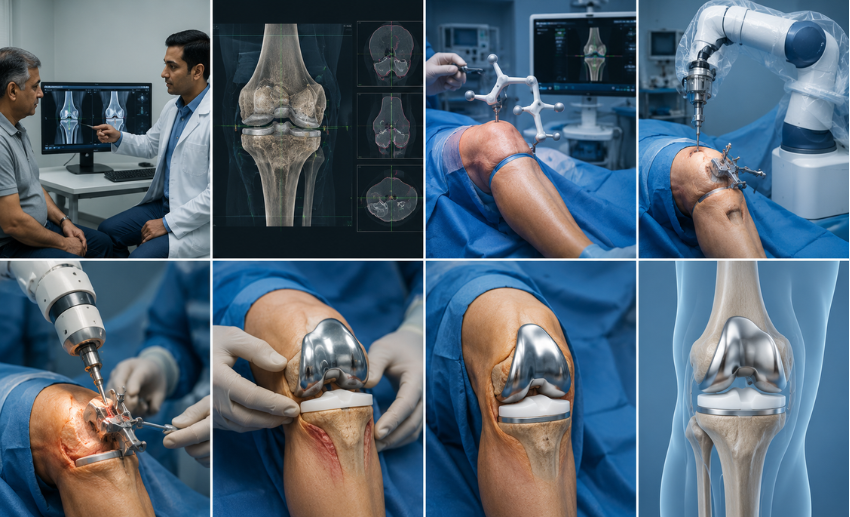
The patient is subjected to a thorough evaluation prior to surgery. It involves physical examination, imaging procedures such as X-rays or CT scans, and medical history. These statistics assist in designing a customized operation strategy.
Doctors utilise such information to map the precise size, shape and position of the implant. When patients are considering the ideal knee replacement physician in Delhi, they are often urged to pick one who has experience with robotic systems.
Step 2: Planning using Robotic Technology.
One of the benefits of robotic surgery is pre-operative planning. The surgeon works with the sophisticated software to simulate the operation. This guarantees that all the movements in surgery are accurate.
It is not the robot system that substitutes the surgeon-it aids the surgeon to work by giving him/her real-time guidance.
Step 3: The Surgical Procedure
The surgeon is aided by the robotic arm during the surgery, as it helps to excise the damaged bone and cartilage. It ensures that only what is required is treated and that healthy tissue is left.
With great precision, the artificial knee implant is inserted. The step is essential as adequate alignment increases the durability of the implant and the functionality of the joint in general.
Expertise is needed, which is why patients tend to choose a leading knee replacement surgeon in Delhi at this stage.
Step 4: Post-Surgery Recovery
Monitoring and promoting the patients to begin the light movement within a day is performed after the procedure. Physiotherapy is a significant part of recovery, which contributes to the restoration of strength and mobility.
Patients have reduced pain and a speedier healing than when undergoing traditional surgery. As a rule, walking with support starts a few days later.
Step 5: Long-Term Care and Rehabilitation.
The rehabilitation process takes a number of weeks. The advice that must be provided to patients is exercise, a healthy weight, and follow-up visits.
Robotic knee implants have a life span of 15-20 years or longer, as long as care is taken.
Conclusion
Robotic knee replacement surgery has revolutionized orthopedic care through increased accuracy, less pain, and faster healing. It is a good alternative where the patient has a severe knee condition and wishes to have a lasting solution.
To the individuals who are contemplating this process, it is advisable to seek the services of a skilled surgeon such as Dr. Abhijit Tayade, who would help you to know whether robotic knee replacement is the correct procedure due to your condition and lifestyle.