Why Does Knee Pain Occur While Climbing Stairs?
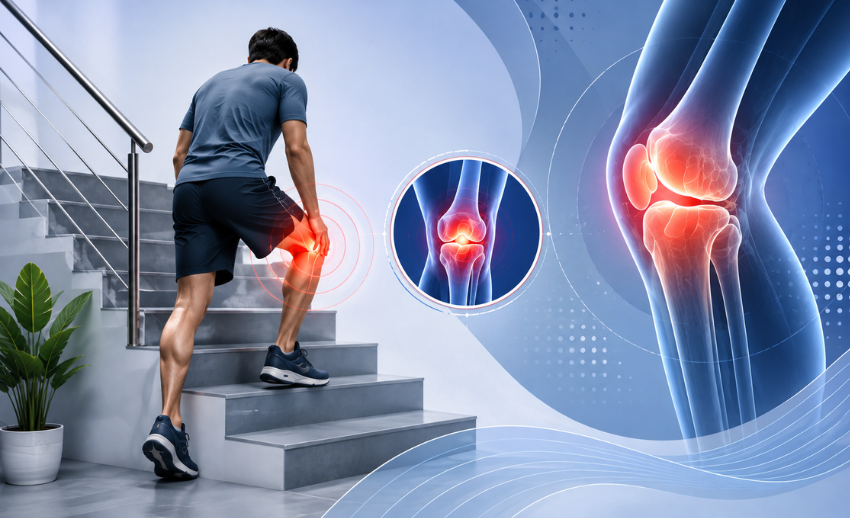
For many individuals, kiddos experience pain when they climb stairs. Any pain during the stair ascent or descent is usually an indicator of some knee joint problem. So much of your body weight is placed on your knees, and during a stair climb, pressure on the knees is amplified. If you know the cause of this pain, you can take steps to prevent it from worsening.
Causes of Knee Pain
The most common cause is damage to the cartilage in the knee, called osteoarthritis. The protective cartilage may wear away, and the bones rub against each other, resulting in pain and stiffness. Patellofemoral pain syndrome, a condition in which the kneecap does not glide evenly over the joint, is another cause. Stair climbing can also be difficult due to ligament injuries, inflamed tendons, or a torn meniscus.
Those who are overweight, have weak thigh muscles or sit for extended periods of time are more susceptible to developing knee pain. Studies show that knee pain affects millions of adults and becomes more prevalent with age.
Pain During Climbing Stairs
On level ground, knees support one to two times body weight when walking. But during an ascent on stairs, the pressure rises to almost three to four times your body weight. This additional force increases stress on the knee joint and accentuates the problem. Going down the stairs may be even more uncomfortable because you must absorb the shock through your knee as you step.
Symptoms that Should Not be Ignored
If you get knee pain when going up and down stairs, you may experience swelling, stiffness, clicking sounds, or a feeling of giving way. Some also find that they have decreased flexibility or they may have problems bending the knee. These symptoms can persist for several weeks or be severe, and medical evaluation is important in this case.
Ways to Manage Knee Pain
Treatment will depend on the underlying cause. Symptoms usually go away with rest, ice, weight-loss and strengthening exercises around the knee. Avoiding overusing the knee and wearing supportive shoes can also help. If conservative treatment fails to provide relief, an orthopaedic knee surgeon in Greater Kailash or an arthroscopic surgeon in Delhi may recommend further evaluation. For advanced arthritis, it may be better to consult the best knee replacement surgeon or the best orthopaedic doctor in Delhi to discuss available treatment options.
Final Thoughts
Over time, persistent knee pain can make it more difficult to perform daily activities. Early diagnosis and appropriate treatment may help preserve joint function and maintain a satisfactory quality of life. Dr Abhijit Tayade, an orthopaedic surgeon in New Delhi, helps diagnose knee conditions and prescribe treatment depending on the individual’s condition.