Best Practices for Post-Surgery Rehabilitation: What Doctors Want You to Know
The healing process of a wound is not the only thing that is required after undergoing orthopaedic surgery. It is concerned with getting your body to be strong and moving and having confidence in a safe and planned manner. The surgeons usually add that half the work is done during surgery, the second part is the rehabilitation.
The importance of Rehabilitation after Surgery
The rehabilitation process contributes to the restoration of mobility, the decrease in pain, the prevention of the long-term inflexibility, or debilitation. It has been found that patients with an organized rehab program heal faster and with better joint functioning compared to those who do not. Regardless of the type of surgery; knee, hip, shoulder or the spine, guided recovery reduces chances of complications like loss of the muscles, joint rigidity and re-injury.
Start Early, but Stay Safe
The majority of physicians advise the initiation of the mild movement shortly after the operation, in some cases, 24-48 hours. Early mobility enhances blood flow, lessens swelling and blood clots are avoided. This does not however imply that one should push against the pain. The exercise must be slow, slow and precise as recommended by your orthopedic specialist. Excessive use of it may slow down rather than accelerate healing.
Adhere to a Physiotherapy Regimen
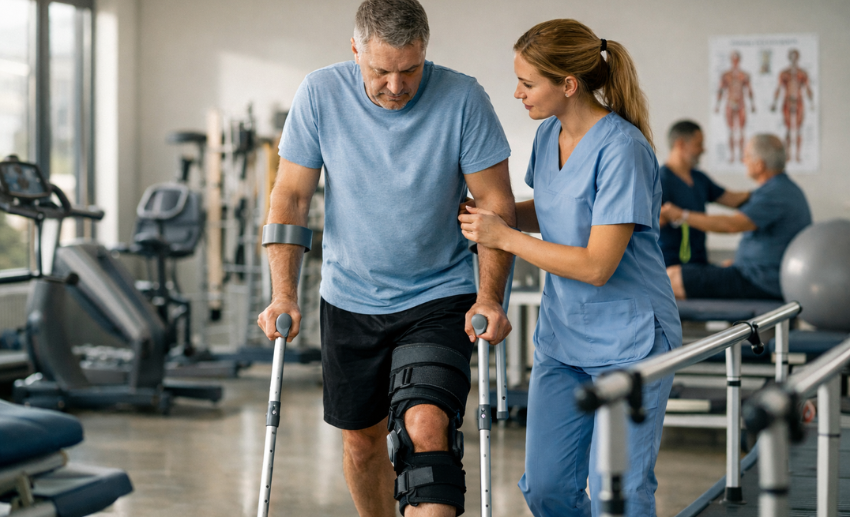
The foundation of post surgical recovery is physiotherapy. An elaborated strategy tends to consist of:
- Stiffness reduction exercises
- Rigorous exercise to help the joint that is operated.
- Balance and coordination are used to prevent falls
In case of an orthopedic surgeon patient in delhi or a sports injury specialist in delhi, the rehabilitation plans are usually provided according to age, type of surgery as well as daily activity levels.
Suffering is A Component of Curing
Suffering during the recovery process is normal yet pain unfamiliar during recovery can halt the progress. Physicians recommend a combination of these measures a course of prescribed medication, ice, rest, and slow increases in activity. Studies indicate that regulated pain management can enable the patients to engage more in the courses that are conducted during the process of physiotherapy and hence they will experience better results once they are undergoing knee replacement surgery or hip replacement surgery.
Recovery is Helped by Nutrition and Rest
Healing tissues need fuel. Protein should be taken regularly to aid muscle building, and calcium and vitamin D aid the strength of bones. Hydration is also of importance in joint lubrication and the general recovery. Quality sleep along with nutrition enables the body to have self-repair. Surgical issues are not many of the causes of recovery delays but poor rest.
Avoid Familiar Rehabilitation Follies
Other patients discontinue exercises when pain subsides, and still others are quickly rejoining the normal activity prematurely. Both can cause setbacks. Physicians always insist on the full course of rehabilitation even when you are already feeling better. This is in particular after surgery done to replace the knee joint or sport-related surgeries done by a best knee replacement doctor in delhi or sports injury doctor in delhi.
Conclusion
The process of rehabilitation after the surgery is a slow process that requires patience, discipline, and professional assistance. In the event that the recovery plans are properly adhered to, the patient is able to resume normal activities without fear of being injured in future. Dr. Abhijit Tayade who focuses on the fact that the regular rehabilitation and medical control are the core pillars of the long-term orthopaedic health.